


Since warmer seasons are approaching, both adults and children will soon experience a special moment of their lives. It almost feels as if we were blooming with nature. Once warmer weather has come, everybody engages in outdoor activities, trips and walks. In this specific time of the year, children can get familiar with nature and learn how to dialogue with it through outdoor games.
However, we’re not the only nor the main characters in nature’s rebirth : insects take a big space both in nature’s changes and in our life. The presence of these little animals might become a decisive factor in our daily life, which in fact might be bothered by the negative consequences of these unwanted encounters.
We should all be ready to handle the possibility of an insect’s bite, in order to treat it efficiently, especially in case it happens to children.
First of all, it’s important to know what kind of insects we might have to face. In fact, every insect has its specific venom and requires a specific kind of treatment.
The insects we usually interact with are mosquitoes and bees, followed by wasps, hornets and sometimes even ticks. For most people, these little animals’ bites only consist of a temporary discomfort, that can be stemmed thanks to simple precautions.
However, some people’s condition is more delicate than others’: children and allergy sufferers can endure serious consequences after an insect’s bite.
Usually, bites’ effects go from irritation to swellings and pain, depending on the kind of sting.
The insect uses its sting to inject a small dose of irritating venom into the skin, causing an inflammation.
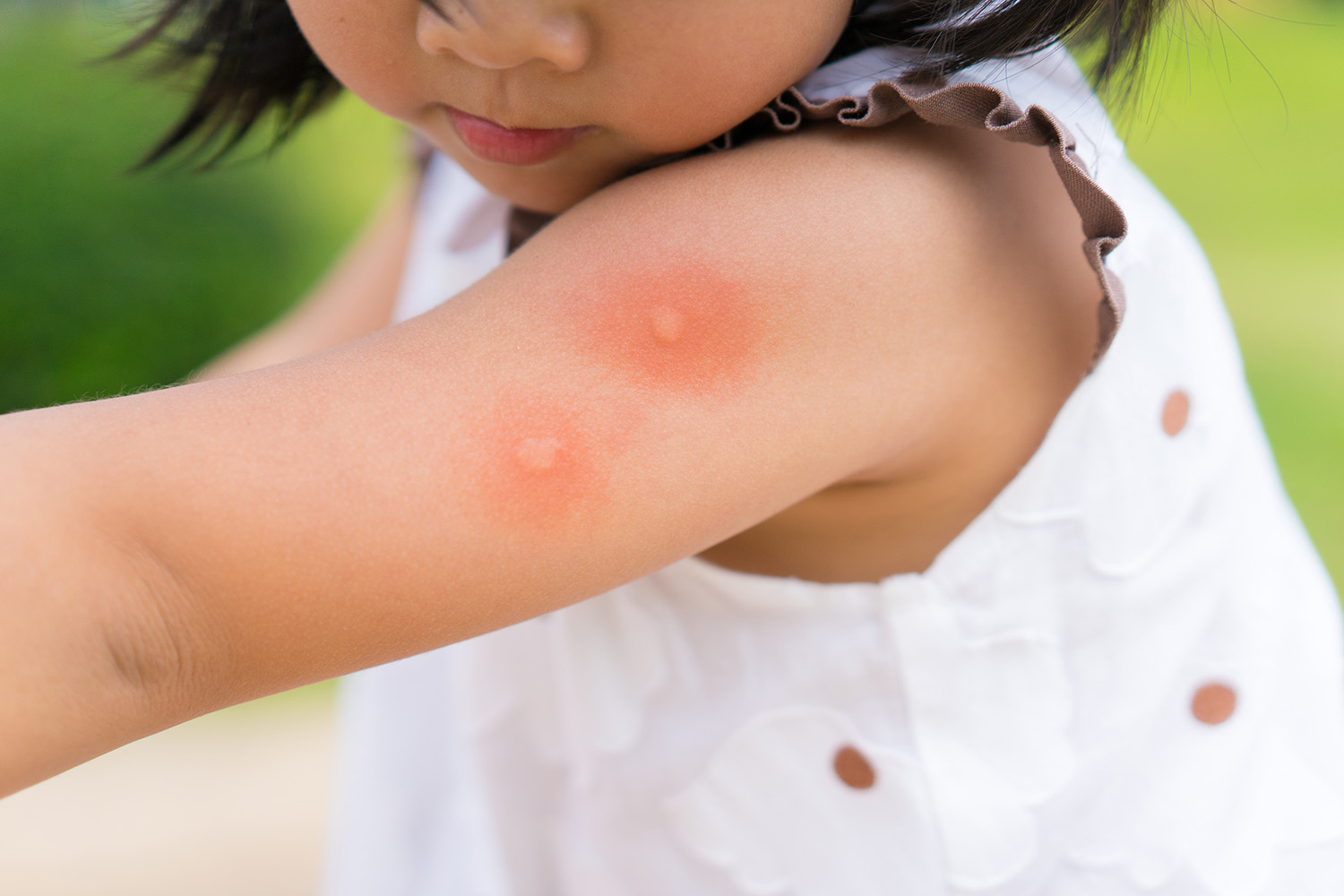
What to do when an insect stings you
If you get stung by a bee, a wasp or a hornet the bite’s effects will be more evident, including burning and pain. In order to treat efficiently this kind of bite, you have to start by extracting the sting from the skin: you may use sterilized tweezers. Pay attention not to drag or break the sting, since it may contain more venom. Once you’ve extracted the sting, you may proceed to disinfect the area. To ease the pain, you may also apply cold water or ice and treat the area with ammonia, which will neutralize the venom, giving you relief from the pain.
Fleas and bedbugs might also bite you, causing itching and small blisters, that might be treated with cortisone creams. However, if the person that gets bitten is allergic to the insect’s venom, has several bites or gets stung in a very delicate area (throat, tongue etc.), you should go and see a doctor
Other bites that might be difficult to treat are ticks’ stings. This small insect remains attached to the skin and must be extracted carefully. Once the bite gets disinfected, you may have to take antihistamines under medical prescription, in order to ease the itching.
The sting must be monitored for a few weeks, after which you may notice another irritation together with fever and other symptoms. If that’s the case, you should go and see a doctor.
However, the most common stings are mosquito bites. These insects could attack every part of the body that isn’t covered by a layer of fabric. Even if the sting may cause a strong itching sensation, it is important not to scratch it, otherwise it may bleed and get infected. Ice, antihistamines, natural cream remedies, or medication can be used to relieve the discomfort caused by the bite.
In some cases these small stings may represent a real danger. Allergy sufferers may suffer from nausea, respiratory distress, headaches and fever and might even go in anaphylactic shock. In this case it’s fundamental to go to the hospital.
Another category for which small bites might be dangerous is that of newborns and children.
Children and mosquito bites
Considering children’s low tolerance towards pain and discomfort, mosquito bites can become a menace to their peace.
Moreover, children are more likely to be bitten by mosquitoes. In fact, these insects are attracted to sweat, which they can smell. Children are physically predisposed to sweat more than adults and the activities they usually engage in (playing, running and sleeping) may accentuate sweating.
How can you efficiently protect children’s delicate skin?
How to protect newborns from mosquitoes
It is well-known that newborn’s skin is extremely sensitive: it gets way more irritated when bothered by a mosquito bite and would react negatively to repellents used to prevent it. Traditional products are too aggressive for the ph of baby’s skin. In fact, even natural products whose concentration is too high (for example essential oils) might cause irritations.
This is the reason why prevention is important.
The safest methods of prevention for newborns’ skin balance are barrier protections: mosquitoes cannot bite over a layer of fabric. It will be useful to put mosquito nets both on windows and over the baby’s bed. Another useful tip might be that of covering babies’ sensitive skin with fabrics that have high breathability.
Moreover, there are natural prevention methods, like using candles and plants whose smell is unpleasant to mosquitoes.
A novelty in children’s protection against insect bites is instead constituted by mosquito patches. These products, specifically designed for newborns, only contain natural substances in percentages that are safe for children.
Remedies for mosquito bites in children
As the months go by and children grow, their skin gets less delicate and sensitive. It is then possible to introduce more elaborate products both to prevent and to treat insect bites.
From six months old to two years old you should choose natural products, that don’t contain parabens, ammonia, icardine and DEET (active substances that are repel insects).
From 2 to 12 years old it is possible to use lotions, spray and products that contain icardine (<20%)
Past 12 years old you can use repellents that contain DEET, which are the most effective.
Linea MammaBaby® satisfies the needs of the youngest
Linea MammaBaby® has come up with a solution to meet parents’ and their children’s needs. Its newest idea is that of a kit that might be useful against insects, especially in summer.
The Kit is made of a small, yellow, cotton bag, which contains two products especially made for skin protection: Zeta Baby (100 ml) and Post Zeta Baby (20 ml).
Zeta Baby is a soothing protection lotion for face and body, suitable for delicate and sensitive skin. Thanks to its specific formula unpleasant to insects, it helps preventing bites. Its natural essential oils also give the skin a feeling of relief. It doesn’t contain chemical nor synthetic repellents.
Post Zeta Baby is a cream gel with a refreshing and soothing action to relieve itching caused by insects’ bites or irritating organisms (nettles and jellyfishes).
Based on natural plant extracts, it gives immediate relief to burning and itching, calming the skin and containing the tingling sensation. It doesn’t contain ammonia.
Moreover, all these products are dermatologically tested and contain no dyes, no silicones and no parabens.

Linea MammaBaby’s practical advices
There’s a few simple tips that can make the difference protecting yourself and others from insects.
You should :
- Cover the most sensitive parts of your body;
- Don’t walk barefoot outdoor;
- Do not use products with a high concentration of fragrance, which may attract insects;
- Rinse the irritated area with cold water and a sterile gauze;
- Apply natural creams or cortisone on the bite;
- Do not scratch the bite, otherwise it will bleed and get infected;
- Apply repellent patches on clothes;
- Apply bracelets whose smells are unpleasant to insects;
- Use a spray against insects’ bites;
- After a bite, apply aloe vera creams.