

Atopic-prone skin is becoming an increasingly common condition among European children. A research carried out by the European Academy of Allergology and Clinical Immunology (EAACI) shows that nowadays, young allergy sufferers with skin that blushes and causes discomfort are between the 10 and 20 percent of the school-aged population.
What are the features of the atopic-prone skin?
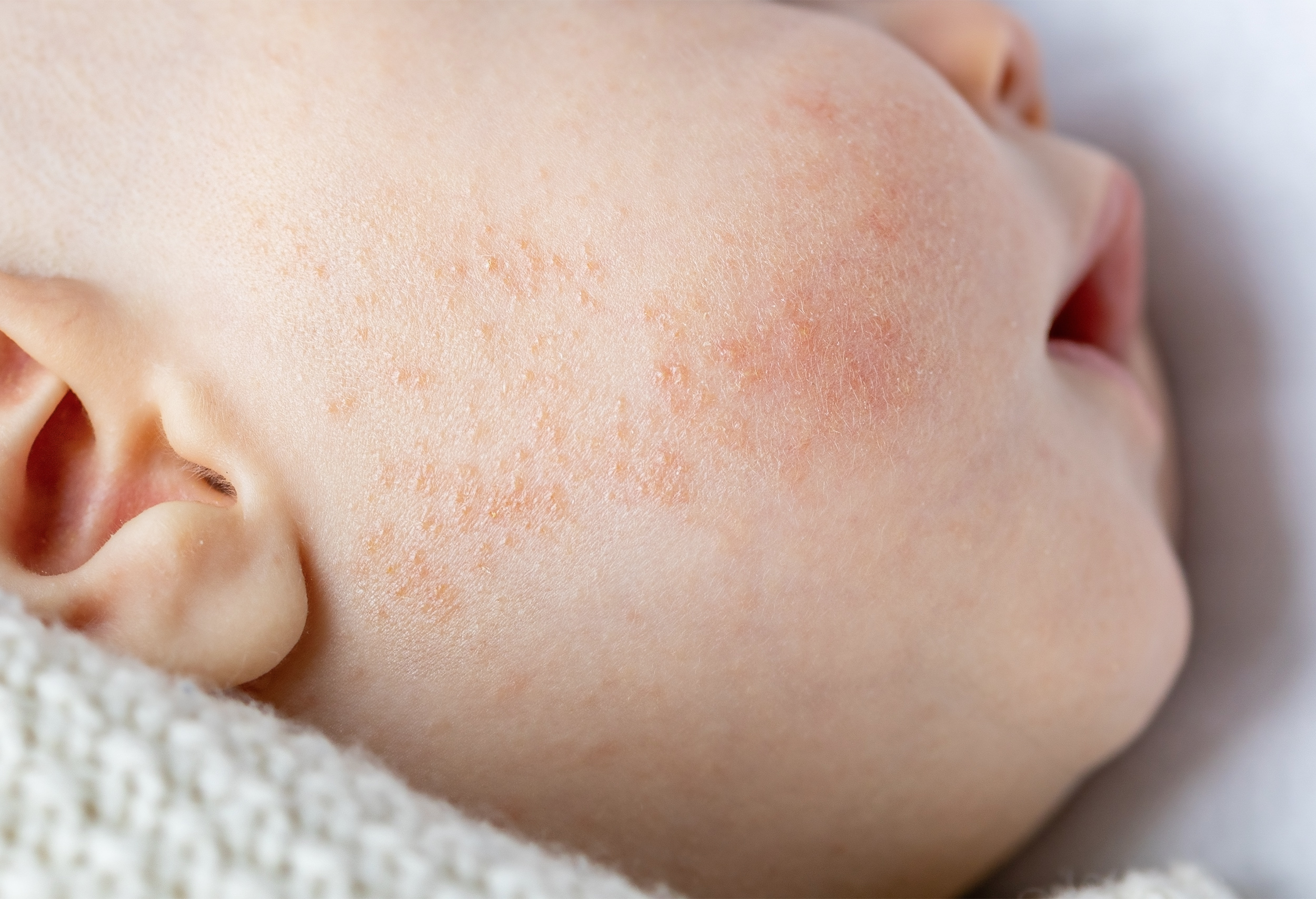
Atopic-prone skin is characterized by severe dryness, redness and causes itching. This discomfort is mainly concentrated on the face, knees, elbows and skin folds of our children, where redness, swelling and itching reveal the presence of the condition. These signs are not just superficial; they can deeply influence the well-being of our children making them feel embarrassed or anxious around other people. However, with targeted and consistent daily care, it is possible to keep the atopic-prone skin of our children under control, ensuring comfort and safety between one appearance and another.
And what are the causes?
The causes of this annoying condition are various:
1. Inheritance
Atopic-prone skin is hereditary, but not contagious. About half of children with a parent who has atopic-prone skin develop the atopic dermatitis (eczema). This percentage increases to around 80% if both parents suffer from this condition. The skin of susceptible people is particularly sensitive and assumes the typical features of the atopic-prone skin due to the lack of the hydrolipidic film, a thin protective layer composed of water and oils that normally forms on the skin and defends it from bacteria and external agents. Moreover, filaggrin, a protein that works like an “adhesive” and ensures the permeability of the skin, is produced. When the lipid and filaggrin levels are inadequate, water evaporates from the skin. Consequently, permeability is compromised and the protective barrier against some harmful factors is weakened, enabling the allergens to penetrate easily.
2. Stress
Stress can cause the appearance of the atopic eczema: studies show that about 30% of the episodes of atopic eczema is caused by the stress. For this reason, it is important to try to keep the negative emotions under control practicing exercises for breathing, yoga or giving attention to themselves.
3. Allergens
This condition can be determined also by a reaction of hypersensitivity to environmental agents and allergens. The alteration of the skin barrier causes an excessive water loss and allows the allergens (like animal hair, pollen, pollution, cosmetics or household products) to penetrate more easily, activating the immune system and causing inflammation. These allergens can be identified through tests carried out by the dermatologist or allergist, and, then it is recommended to avoid exposure to them as much as possible to reduce the frequency of flare-ups.
4. Heat and perspiration
Heat and perspiration are two factors that can increase skin dryness and allow allergens to penetrate the skin barrier and, as a result, provoke inflammation. The effect could be reduced by drying the skin (dabbing, not rubbing). Wearing loose and light clothing can help diminish skin exposure to heat and sweat.

How to take care of atopic-prone skin
Atopic-prone skin requires the consultation with a pediatrician and eventually also a dermatologist. In order to take care of our children’s skin on a daily basis by soothing, preventing and reducing the reappearance of atopic-prone skin, Linea MammaBaby® has created two new products that will become reliable allies for the sensitive and atopic-prone skin: Vincenzina, the Baby Body Cream for atopic-prone skin, and Vincenzino, the Baby Cleansing Oil for atopic-prone skin.
For daily cleansing, we recommend you Vincenzino, our Baby Cleansing Oil for atopic-prone skin. Its formulation, enriched with plant lipids, is designed to protect and maintain the function of the skin’s lipid barrier and to provide intense, long-lasting hydration for adults and children alike. Moreover, it contains Sweet Almond Oil and Shea Oil that work together to deeply nourish the skin, giving it softness and elasticity. Vitamin F, included in the formulation, helps improve hydration and skin appearance. Vincenzino stands out for its innovative fragrance-free formulation, purposely developed to minimize the risk of irritation and allergies, thus ensuring gentle and safe care for the most fragile and sensitive skins. The result? A nourished, soft and elastic skin every day.
To complete the routine, it is essential to keep atopic-prone skin always moisturized: our Baby Body Cream for atopic-prone skin Vincenzina is a cream with a soft and full-bodied texture purposely designed for extremely dry skin or skin at risk of atopic eczema. It is enriched with natural extracts and oils that give deep nourishment, making the skin soft and elastic. The extracts of Annona Cherimola (that relieves itching), Phragmites Karka (soothing and calming) and Poria Cocos (nourishing and antioxidant) act to re-balance skin’s lipid film, providing an immediate relief and reducing itching. The presence of Almond, Shea and Marigold oils along with the precious oil extracted from Limnanthes Alba seeds, confers unique soothing properties, that soothe and nourish also the most irritated skins.

Additional practical tips to relieve discomfort caused by atopic-prone skin
• Create an appropriate environment at home: it is essential to eliminate sources of allergen accumulation (like soft toys and carpets), vacuum regularly and ventilate the rooms daily, in particular bedrooms. If necessary, it may be helpful to buy a mattress topper and cushions purposely to prevent dust mites.
• Maintain an appropriate temperature: Atopic-prone skin is characterized by a condition of severe dryness of the skin. This causes an itchy feeling that can bother children during the night, and, consequently, their parents as well! To allow your whole family a restorative sleep it is essential to keep the temperature between 18 and 20 degrees in the bedroom: the air and environment will not result too dry.
• Check the diet: any food intolerances may worsen the issue.
• Wear sustainable clothing made of natural fiber: child’s clothes should be made of natural fibers, such as cotton, and it is recommended to wash them with Marseille soap or detergents free of fragrance and chemical components.
One last piece of advice from Linea MammaBaby®
The products we use to care for our babies and children’s skin are important. Choose to rely on guaranteed cosmetic products, that is, formulated specifically to meet the needs of skin during infancy and certified for their skin tolerability in order to reduce the risk of skin irritation.