

The importance of bath time
Bath time can be very relaxing for your baby, a playful experience that they look forward to but that the parents experience with some concerns. The hygiene and cleansing of the child are moments of joy, fun and entertainment, and offer the possibility of bolstering the all-important parent-child bond.
Useful information on bathing
For a safe bath, you need to prepare everything you need in advance so that you can devote yourself solely to the baby. Having all the necessary equipment immediately available and at hand increases safety because the baby is constantly supervised without distractions and avoids exposure to the gradual cooling of the water.
The must-haves are:
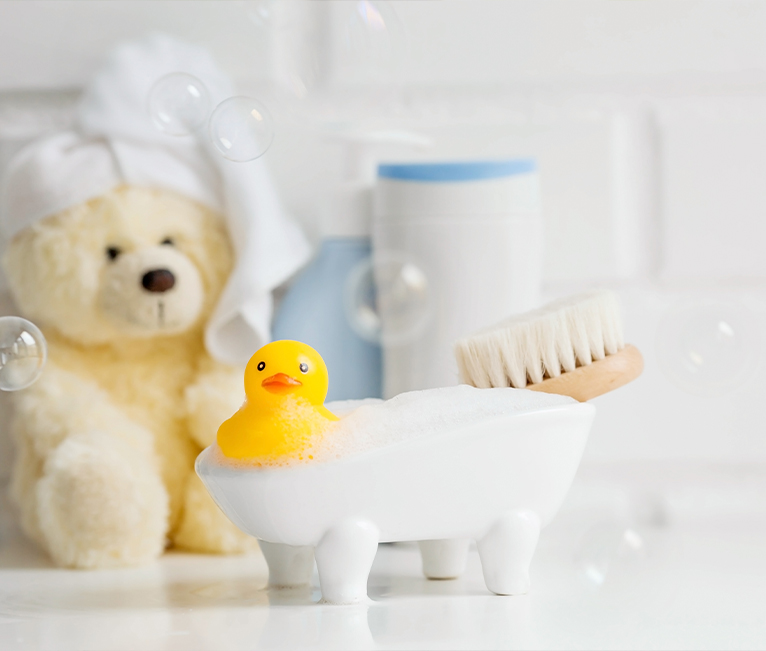
– Baby bath or basin with a cushion or rubber mat to prevent slipping
– Thermometer for measuring water temperature (35°-37°C)
– Towels
– The baby’s linen
– Diaper
– Hairbrush
– Changing table
The room must be sufficiently warm but avoid excessive heat and humidity. There must be no major temperature differences between one room and another to avoid chills.
First of all, wash your hands thoroughly. The baby bath must be placed on a very stable and large surface, not close to taps because of the risk of scalding from hot water.
Now dilute the cleanser (Cosmos Natural Baby Bath) in water to gently wash both body and hair and gently immerse the baby in the water, assessing their reaction. Cosmos Natural Baby Bath with organically-grown olive extracts, chamomile and vegetable glycerine makes the skin soft and moist, while the chamomile soothes even the most delicate skin. A good alternative is Baby Rice Starch. It creates a good barrier against bacteria as the pH of the baby’s skin is not sufficiently acidic and perspiration is insufficient. Rice starch dissolved in water is a gentler solution than classic talcum powder, which can clog pores and cause unpleasant irritation.
While being washed, the baby may like to be stimulated by the parent by talking or singing to him, and when the baby is about three months old, floating toys can be placed in the tub to keep them amused.
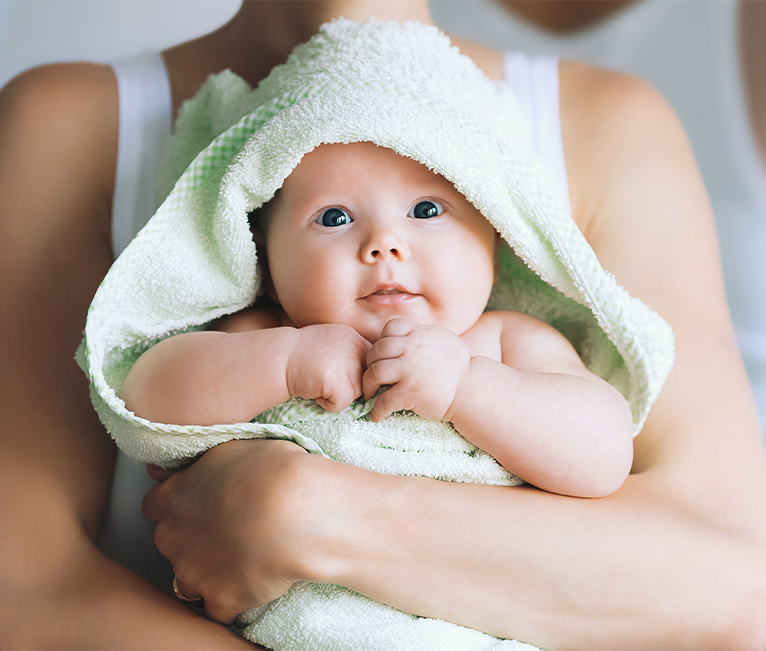
The bath can last as long as the child likes it, checking from time to time that the water is still warm. Once the bath is over, it is important to dry the baby well, dabbing the skin without rubbing it and paying attention to the skin folds, which should not be left damp because they can easily macerate.
There is no perfect time for bathing, but it should be a pleasant moment when the parent is relaxed and not in a hurry. In any case, it is preferable to bathe away from meals to avoid interfering with digestion. However, you should also avoid bathing if the baby is hungry because their primary need is to feel full and nourished and as a consequence, the bath, which should help relaxation and foster more peaceful sleeping, may be unwelcome.
Theoretically, it would be good to bathe even daily, setting a schedule. The bathing ritual should be limited to 2-3 minutes for newborns, who are very sensitive to the cooling and fatigue of a prolonged bath, while it will last longer and longer as the baby enjoys contact with water more and more. However, it can be important to remember that bathing must never last longer than 10-15 minutes because staying in the water for longer than that can cause maceration of the skin.
There are no real contraindications to washing the baby daily, although it is not necessary because babies only get dirty in the nappy area or around the mouth and neck. If you notice that the child experiences bath time as a moment of tension or discomfort, it is better to reduce the frequency, cleansing the child adequately, but avoiding or limiting the immersion in water.
Baby’s first bath
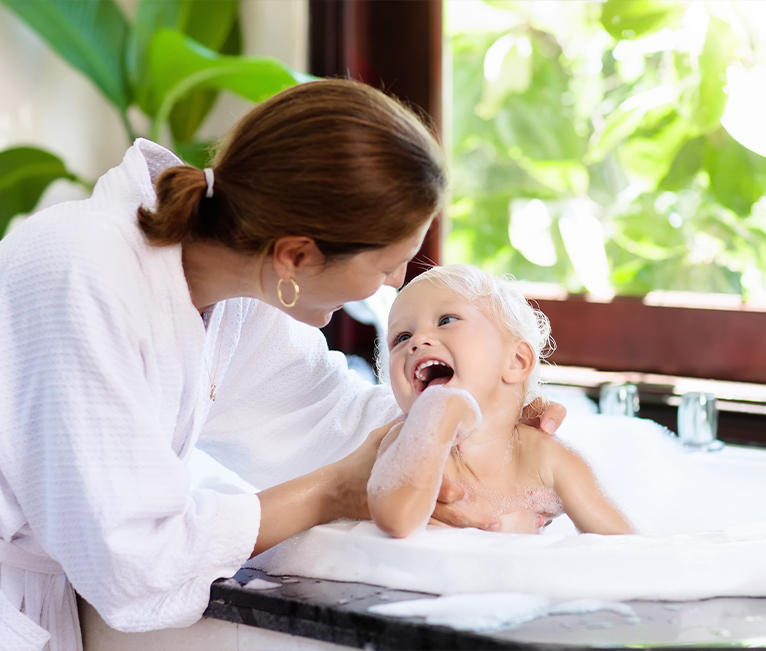
Baby’s first bath is a delicate moment for many reasons. In addition to cleansing, it is useful to activate blood circulation and perspiration. It is also an experience that reminds the baby of the environment inside their mother’s tummy, which is reassuring and pampering. Finally, the father should join in the first bath ritual by the father, to create a wonderful and exciting moment in the new family routine.
The baby can also be bathed the first few days after birth. It is not necessary to wait for the umbilical stump to fall off. Just dry it well and wrap it in sterile gauze to help it dry. It is not necessary to apply disinfectants, but care must be taken to dry the base of the cord thoroughly, where secretions can collect and harbour bacteria.
Once you have prepared all the equipment, immerse the baby in the water by passing your left arm behind their shoulders and holding them under the armpit so that you have the other hand free to wash them. There is no need for sponges or washcloths, just a clean hand will do because sponges can be a breeding ground for bacteria in the long run. The ears should also be cleaned several times a week, with a cotton wool stick, but only externally so as not to risk causing injury to the eardrum and not to form a plug of earwax.